Clinical department

RadiationOncology

Advancing Cancer care through Precision Radiotherapy

Radiation Oncology

Department overview

The Department of Radiation Oncology is dedicated to the treatment of cancer using advanced radiation therapy techniques. Radiation therapy is a safe and effective method that uses high-energy rays to destroy cancer cells while preserving as much normal tissue as possible.

Our department provides comprehensive care for patients with all types of cancers, including cancers of the breast, head and neck, brain, lung, gastrointestinal system, prostate, gynecological organs, and pediatric cancers.

We focus on delivering personalized treatment, ensuring that every patient receives care tailored to their specific condition. Our team works closely with specialists in surgery, medical oncology, radiology, and pathology to provide a multidisciplinary approach for the best possible outcomes.

Our department is staffed by experienced radiation oncologists, medical physicists, radiation therapists, and oncology nurses, all committed to providing compassionate and high-quality care.

Message from the Head of Department

“As the Head of the Department of Radiation Oncology at the Cancer Institute (WIA), Adyar, it is my privilege to share our vision and commitment to the communities we serve. For over seven decades, the Cancer Institute has stood as a beacon of hope—championing equitable, compassionate, evidence-based cancer care for every individual, irrespective of background or circumstance. Today, as cancer care grows more sophisticated, our mission remains clear: to deliver world-class radiation therapy rooted in scientific rigor, supported by advanced technology, and delivered with the utmost empathy. Our team of clinicians, physicists, technologists, and nurses work with a shared purpose—to provide safe, precise, and personalised treatments that improve outcomes while preserving quality of life. We are equally committed to continuous learning, training the next generation of oncologists, advancing research, and collaborating with national and international partners to raise the standards of cancer care in India. Our work is strengthened by the trust and support of our patients, caregivers, donors, and institutional stakeholders, to whom we remain deeply grateful. As we look ahead, we reaffirm our dedication to innovation, integrity, and patient-centric care. Together, we can build a future where every patient has access to timely, high-quality cancer treatment and the confidence that they are never alone in their journey.”

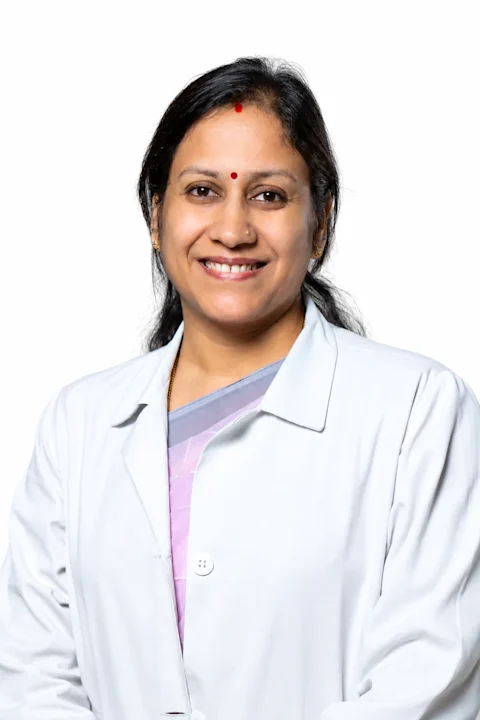
Dr. Priya IyerProfessor & Head - Department of Radiation Oncology
View Profile

Conditions we treat

Advanced Radiation Approaches

This is the most common form of radiation treatment. Radiation is delivered from a machine outside the body and directed precisely at the tumor.

    • This is the most common form of radiation treatment. Radiation is delivered from a machine outside the body and directed precisely at the tumor.
    • Advanced techniques include:: 3D Conformal Radiotherapy (3D-CRT):: • Uses imaging to target tumors in three dimensions IMRT (Intensity-Modulated Radiation Therapy):: • Shapes radiation beams to match the tumor, reducing damage to nearby normal tissues IGRT (Image-Guided Radiation Therapy): Uses daily imaging to improve accuracy:: • VMAT (Volumetric Modulated Arc Therapy): Delivers radiation quickly with high precision

When to visit

  • After surgery, radiation may be advised as a treatment protocol for local treatment and reduce local recurrence – Adjuvant radiation
  • Before surgery in some cancers, radiation is given to decrease or shrink the tumor size and improve surgical outcomes (neoadjuvant therapy).
  • Certain cancers are treated with combined chemo-radiation for better control.
  • For certain cancers radiation may be the only form of treatment
  • Organ preservation in some cancers
  • Radiation can effectively relieve pain, bleeding, or obstruction in advanced cancers
  • For specialized treatments such as stereotactic radiotherapy, Total Marrow Irradiation, or re-irradiation in selected cases.

Facilities & capabilities

HDR V3 Brachytherapy Unit

True Beam with FFF

Optima CT 580 RT

Synergy Platform

Go SIM CT simulator

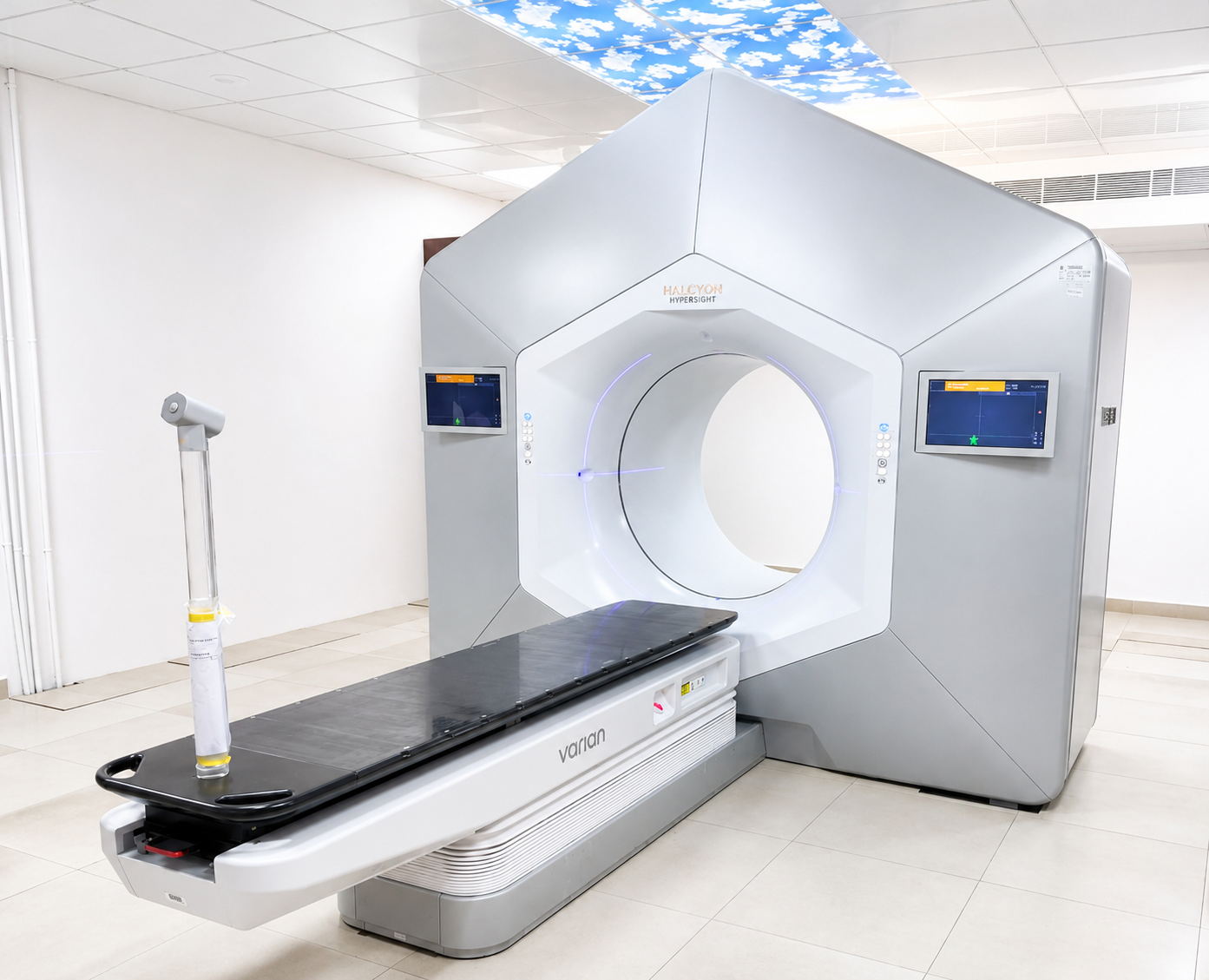
Halcyon Hypersight

Cobalt Teletherapy Unit

SGRT Vision RT systems

Legacy

  • The first Telecobalt therapy unit in South East Asia was installed in 1956
  • The first indigenous radiotherapy simulator was designed and installed in 1969
  • The First Linear accelerator in the country was installed at the institute in 1976
  • First in India to try Hyperbaric oxygen with RT (1979).
  • First Medical Physics Dept. in our country (40 Yrs)
  • First Hyperthermia Unit installed at CI in 1983
  • First Intra Operative Radiotherapy (IORT) facility and the first indigenously designed and built brachytherapy unit were installed in 1995
  • First Rapid Arc Treatment installed and initiated in our country (2009).

Achievements

7 Milestones
  1. 01
    University Gold Medal in MD Radiation Oncology Examination: 2024
  2. 02
    Our team has presented posters and papers in several international and national conferences like ASTRO, FIGO, FARO, ESMO, ESTRO, ACRO, ISOCON, Global cancer congress, Indian cancer Congress, AROI, IBSCON etc
  3. 03
    Our team is National faculty for Prestigious teaching programmes like AROI ESTRO Gynec, National AROI and State AROI conferences
  4. 04
    Participated in Quality improvement projects conducted by the National Cancer Grid

Contact Radiation Oncology

Professor & Head - Department of Radiation Oncology

Dr. Priya Iyer

Cancer Institute (WIA), Adyar campus