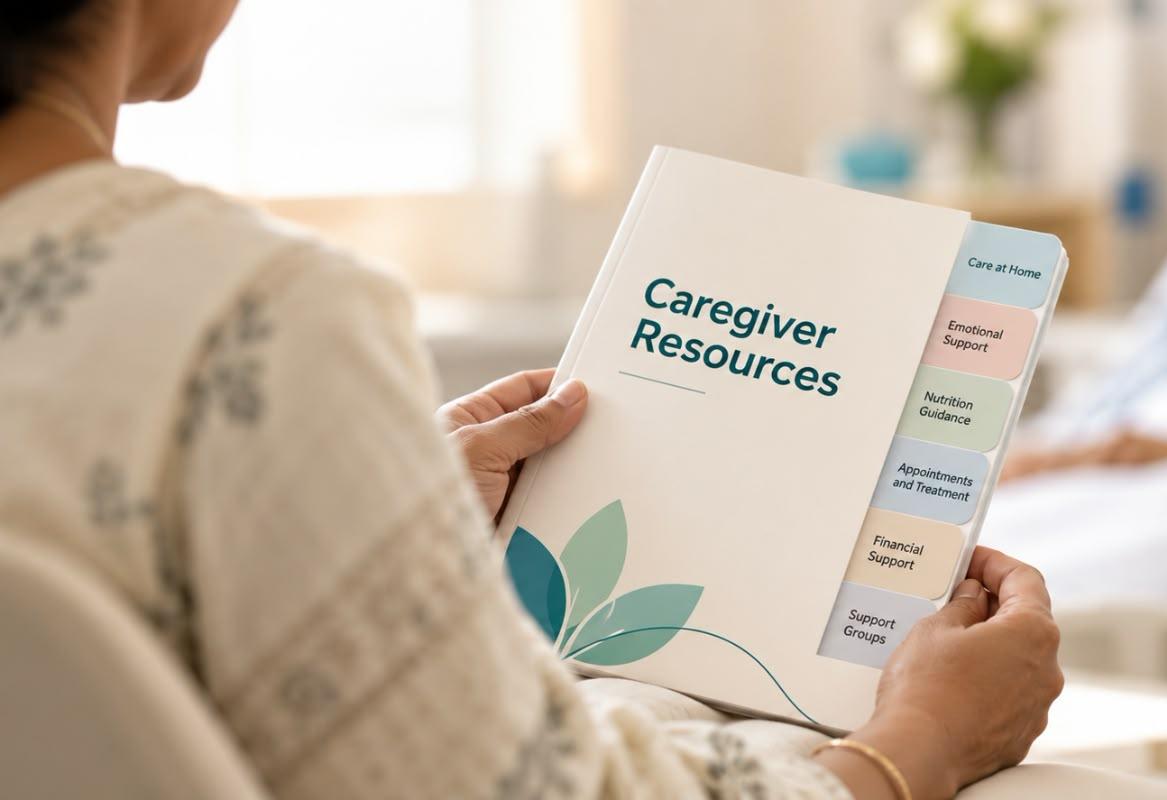
Family & Caregiver Support
Guidance, counseling, and psychosocial coping strategies for families and caregivers through every stage of the cancer journey.
Caring for a loved one with cancer is deeply meaningful, but it can also feel emotionally overwhelming, exhausting, and sometimes even uncertain. Family caregivers often manage appointments, hospital visits, medicines, symptom monitoring, emotional support, and day-to-day care, most often with little preparation and information. This can lead to fear, worries, low mood, sleep disturbance, burnout, and difficulty balancing work, family, and personal health.
From diagnosis to treatment phase, survivorship, palliative care, and bereavement, caregivers need support too. Our expert Psycho-Oncology team supports caregivers and families with guidance, counseling, and coping strategies through every stage of the cancer journey. We help families feel heard, informed, emotionally supported, and better prepared for the challenges of caregiving.
Caregivers may experience:
Constant worry, sadness, fear, or irritability.
Fatigue, poor sleep, and emotional exhaustion.
Guilt about "not doing enough"
Not taking time for self-care.
Financial pressure, work disruption, and role overload.
Family communication difficulties and decision stress.
Social isolation and loss of normal routine.
Feeling unprepared for treatment-related care at home.
We provide family- and caregiver-focused psychosocial support tailored to each family’s needs. Support may be offered individually, as a family session, or as part of patient-caregiver joint care.
Services generally include:
Distress screening to identify caregivers who may need additional help.
Emotional support and counseling.
Psychoeducation about caregiving demands, coping, and what to expect during treatment and recovery.
Family meetings to improve understanding, shared decision-making, and supportive communication.
Creating a realistic self-care plan — support for self-care, sleep, routine, and healthy coping habits.
Building skills to manage uncertainty, difficult conversations, and changing roles.
Psychosocial caregiver support may be helpful for spouses, parents, children, siblings, relatives, and any primary caregiver involved in the care of the patient.
Early Support Reminder: You do not need to wait until you feel exhausted to seek support. Reaching out early can help you feel more prepared, and more able to care for both the patient and yourself.

